By Cassie
The event production industry rebuilt its touring calendar into a year-round cycle, and LED screens moved from a decorative backdrop to the structural centre of most stage designs. Festivals, product launches, esports finals, corporate keynotes and arena concerts now treat the video wall as the primary storytelling surface rather than a supporting prop, and the creative brief is written around the screen instead of alongside it.
That shift changes what organizers actually buy. Panels have to assemble in a few hours, survive repeated truck transit and unpredictable weather, and deliver camera-friendly imagery under broadcast lighting. This guide covers the demand drivers shaping event LED in 2026, the specifications that matter for rental and staging work, the product families Asia Vision Technology recommends, and the questions production managers raise most often during tender.
Every live event is now filmed by default. A single keynote generates a livestream, a highlights reel, a dozen social clips and a sponsor recap, so the stage has to look correct on a camera sensor and not only to the audience in the room. That single change pushed refresh rate from a footnote into a headline specification, because an LED wall running below the camera shutter produces the horizontal banding that ruins broadcast footage. Production managers who once accepted 1920 Hz panels now specify 3840 Hz or higher as a baseline condition of the contract.
Touring economics drive the second wave of demand. Rental houses buy cabinets knowing each unit will be rigged and struck dozens of times a year, so assembly speed, cabinet weight and service access are commercial variables rather than engineering details. A 500 by 500 mm cabinet that two technicians can lock together without tools, and that allows a failed module to be replaced from the front while the wall is already hung, protects a show schedule that has no spare hours in it. Lighter cabinets also reduce truck count and rigging load, which lowers the transport and labour line on every tour.
Creative ambition adds a third driver. Designers increasingly ask for screens that wrap around the performance space, that rise from the stage floor as interactive surfaces, and that behave as transparent scenery so a performer can stand behind the wall and remain visible. Fine pixel pitches in the P1.5 to P2.6 band have become normal for arena work because the front rows sit close enough to resolve individual pixels, and the same cabinets now serve corporate stage sets, exhibition booths and fashion shows within a single rental inventory.
The outdoor festival season supplies the last and loudest demand signal. Open-air stages contend with direct sun, rain and dust across a multi-day programme, so the wall has to hold brightness against ambient daylight and stay sealed against weather that changes hour by hour. Event organizers therefore split their inventory decisions: fine-pitch indoor cabinets for arena and studio work, and a weather-rated series with a high brightness ceiling for the summer festival circuit and any outdoor activation that cannot be rescheduled.
The recommended approach is to specify by stage role rather than by a single model. A main performance wall needs a fine pitch and the highest refresh rate available, while a side-fill or sponsor ribbon can accept a coarser pitch because the audience never stands close to it. Distinguishing those roles inside one tender keeps budget concentrated where the camera actually looks. For a touring package, the sensible default is a dedicated rental cabinet that stacks to standard truss dimensions and is available in enough quantity to cover a large stage without mixing generations of hardware.
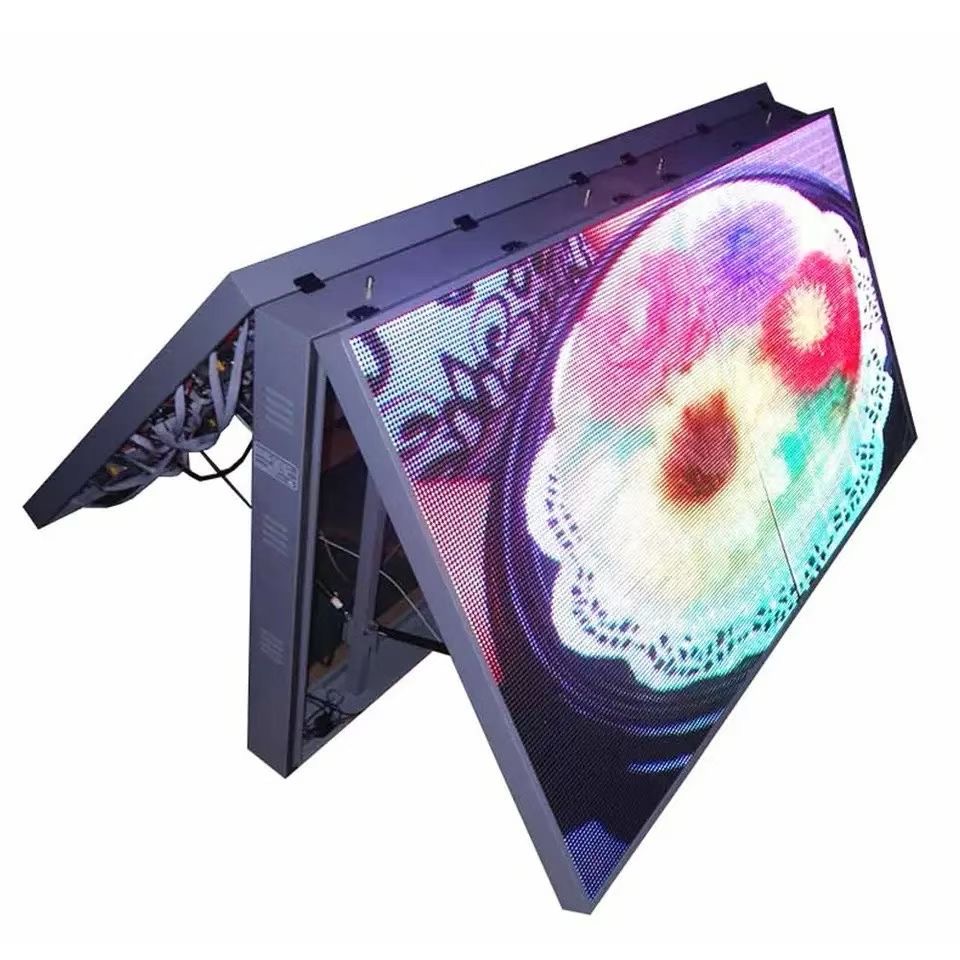
For the outdoor legs of a season, the specification changes to ingress protection and brightness headroom. A rental cabinet designed only for indoor use will fail eventually under rain load, no matter how well it is draped, so a sealed outdoor-rated series is the honest choice for festival front-of-house and any activation that is built once and left standing for a week. The table below sets out the recommended mapping of stage role to product series for a typical 2026 event package.
| Stage Role | Series | Pixel Pitch | Key Specs | Why It Fits |
|---|---|---|---|---|
| Main stage wall | X Series Rental | P2.6 / P3.9 | 500 x 500 mm cabinet, 6.5 kg, 3840 Hz | Camera-safe refresh, fast rigging, front and rear service |
| Close-view corporate set | CV-PRO Indoor | P1.2 / P1.5 | COB option, 10000:1 contrast, 800-2500 nits | Fine detail for front rows and broadcast close-ups |
| Outdoor festival stage | D-PRO Outdoor | P3.9 / P4.8 | IP65 sealed, 8000+ nits, 1920 Hz and above | Holds image against daylight and rain across a weekend |
| Esports and studio | CV-PRO Indoor | P1.9 / P2.6 | High refresh, low latency signal path | Clean motion for gaming capture and stream overlays |
| Sponsor ribbon and side fill | X Series Rental | P3.9 / P4.8 | Lightweight cabinet, quick-lock frame | Cost-efficient coverage for non-critical sight lines |
Event work punishes suppliers who cannot repeat a build. A rental house that standardises on a cabinet format expects the two hundredth unit to lock into the first without shims, and it expects spare parts to arrive before the next load-out. Asia Vision Technology builds its rental range around fixed cabinet geometry, so a model chosen for one tour can be expanded season after season without a redesign, and the X Series cabinet at 500 by 500 mm with a 6.5 kg weight is deliberately sized so a standard truck pack can be planned around it.
The range is broad enough to cover both halves of the event calendar from one supplier. Pixel pitch spans P0.9 to P20, indoor brightness is selectable from 800 to 2500 nits and outdoor cabinets run from 5000 to 10000 nits, so a fine-pitch arena wall and a weather-rated festival screen can be quoted inside a single procurement. Refresh is rated at 3840 Hz or above indoors and 1920 Hz or above outdoors, which keeps the wall clean on camera whether the show is streamed from a studio or filmed from the middle of a field.
Certification and aftercare follow the same logic. Products are certified to CE, FCC and RoHS, with UL and ETL paths available for North American events and UKCA documentation for British promoters, so an international tour does not need separate hardware per territory. Every panel carries a three-year warranty and a rated 100,000 hour service life, and production is quoted at 15 to 20 working days, which is short enough to cover a replacement order placed after a busy summer run.
For this requirement our range covers it directly: the COB Z rental series (7680Hz flip-chip) and the COB ZH touring series (sealed, wind-rated).
Related reading: Public procurement of LED displays in US
Need LED display solutions?
Contact Asia Vision for competitive pricing and specs.
📩 Get a Quote WhatsApp