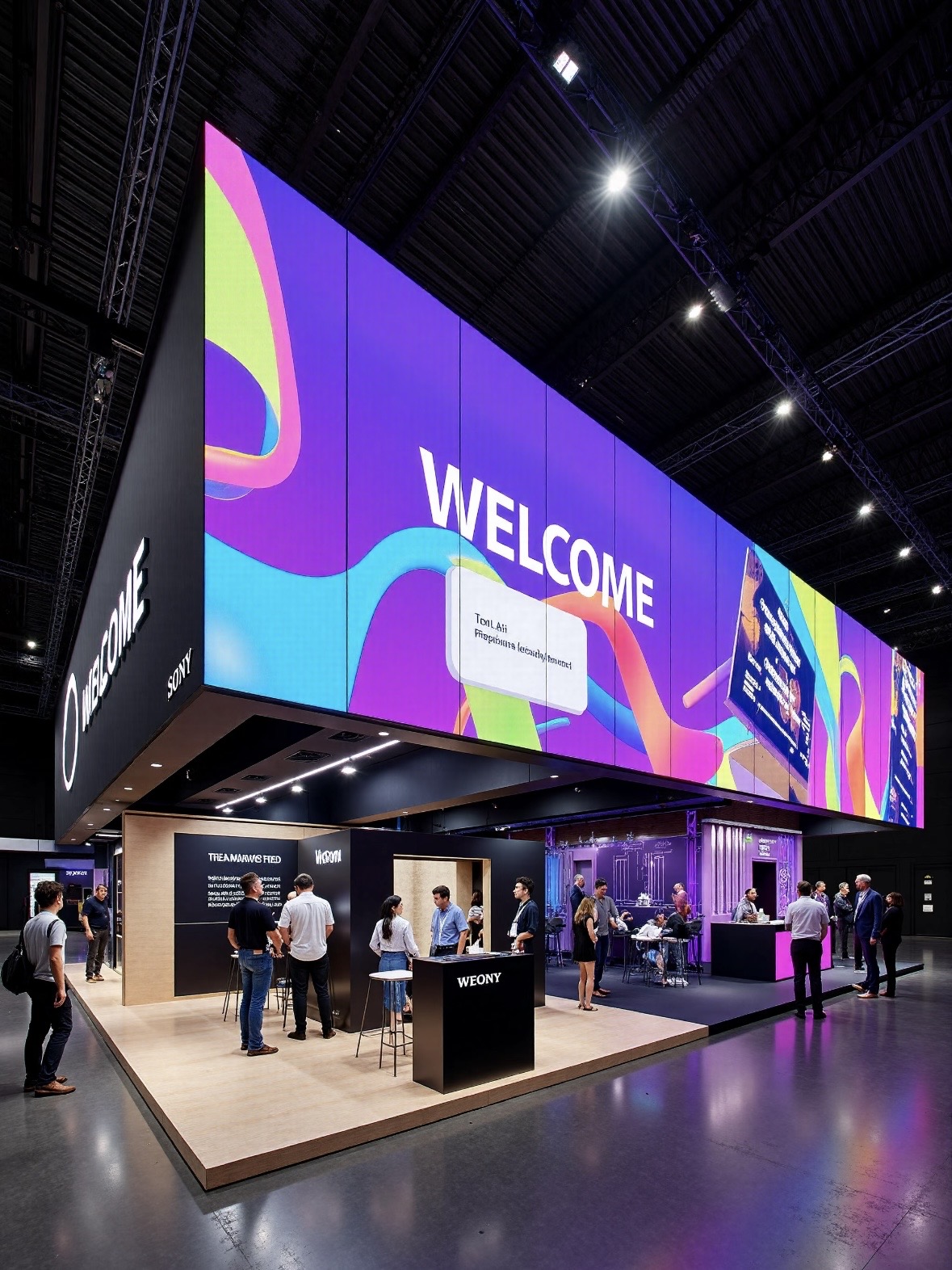
An LED rental business sells access to a screen for a few days, not ownership of hardware. That single difference reshapes every decision, from how you buy panels to how you price a job and how much abuse the product must survive. A rental fleet is capital equipment that has to earn back its cost across dozens of events, so durability and serviceability matter more than the lowest purchase price.
New operators often copy the buying habits of a fixed installation and order one large screen in a single pixel pitch. That approach fails in the rental market because no two events want the same shape. A concert stage wants a wide, coarse banner. A corporate keynote wants a fine-pitch wall behind the speaker. A product launch wants a branded booth with curved corners. A fleet built around one configuration cannot serve any of them well.
The rental model also changes the customer relationship. You are not shipping a product and closing a ticket; you are committing to a show date. If a panel fails on the morning of an event, the client loses a stage and you lose the account. That is why rental companies invest in spares ratios, flight cases, and trained crews rather than in the cheapest cabinet on the market.
This guide walks through the decisions that decide whether a rental business becomes profitable: how to structure the fleet, what mobility really costs, how to keep panels booked instead of shelved, and how to choose hardware that survives the road. The technology choices and the business choices are inseparable, so we treat them together.
A rental fleet works best when it is built around a small number of platform families rather than a long list of one-off sizes. Standardizing on 500 by 500 millimeter cabinets lets you build a tall banner, a wide wall, or an L-shaped corner from the same stock. It also simplifies spares, rigging hardware, and crew training, because every panel handles the same way.
The X series is built for exactly this role. Its 500 by 500 millimeter cabinets weigh about 6.5 kilograms, support both front and rear maintenance, and use a quick-lock system that lets two technicians stack a wall without tools. Front and rear service means a panel flown high on a truss or bolted flat to a wall can still be repaired, which removes one of the biggest limits on where a rental wall can go.
Pitch range is the other axis. Most rental work clusters around P2.6 and P3.9, because those two cover the widest span of viewing distances. P2.6 handles keynote stages and close camera work, while P3.9 stretches budget across larger areas and longer throw distances. Adding P4.8 or P6 extends reach to big outdoor stages where the audience sits far back.
Start with depth in one platform rather than breadth across many. A fleet of two hundred matching panels can serve a major event, split across two smaller jobs, or scale down to a single booth. A mixed bag of forty panels in five incompatible sizes usually sits idle, because no single booking can use all of it at once.
| Event Type | Typical Pitch | Wall Size | Fleet Implication |
|---|---|---|---|
| Concert stage and festival | P3.9 - P4.8 | 12 - 30 m wide | High panel count; needs spares and crew |
| Corporate keynote | P2.6 - P3.9 | 4 - 10 m wide | Fine pitch; camera-friendly refresh rate |
| Product launch booth | P1.9 - P2.6 | 3 - 8 m wide | Small quantities; curved and corner shapes |
| Sports arena ribbon | P4.8 - P6 | Long and low | High total count; durability focus |
| Wedding and gala | P3.9 - P4.8 | 3 - 6 m wide | Frequent short bookings; fast turnaround |
| Outdoor activation | P6 - P10 | 6 - 20 m wide | Brightness and weather sealing |
The purchase price of the panels is only the first line. A rental business spends heavily on everything that makes the panels travel. Flight cases, lifting bars, clamps, data and power cabling, spare modules, and a service bench are all part of the capital outlay, and they scale with the fleet even when the fleet is idle in the warehouse.
Transport is a recurring cost that new operators consistently underestimate. A large rental wall is bulky and heavy, so it needs a truck, a driver, and often a second vehicle for the control and audio gear. Round trips to remote venues consume fuel and crew hours, and those hours are the same ones you would otherwise bill to another job.
Labour is the largest hidden line. Building a wall of two hundred panels, testing it, running it through a show, and striking it afterwards takes a trained crew across several days. Overtime during load-in and load-out is normal, and union venues add their own rules on hours and headcount. Price the job as a project with a full crew cost, not as a day rate for one technician.
Insurance and depreciation complete the picture. Panels get scratched, dropped, and rained on. A realistic plan sets aside a repair reserve and depreciates the fleet over a defined number of shows, so replacement is funded from revenue rather than from a sudden loan after a bad season.
| Cost Category | One-Time | Recurring | Scales With |
|---|---|---|---|
| Cabinets and control | Yes | - | Fleet size |
| Flight cases and rigging | Yes | Replacement | Fleet size |
| Spare modules and parts | Yes | Consumable | Fleet size |
| Transport and vehicles | Yes | Every job | Distance and crew |
| Crew labour | - | Every job | Show days and area |
| Insurance and storage | Optional | Monthly | Fleet value |
Utilization is the number that decides profitability. A panel that rents forty weekends a year pays for itself quickly; the same panel booked ten times does not. The operator's job is therefore not just to own good hardware but to keep it moving, which means marketing to event producers, AV companies, and venue managers who book again and again.
Sub-rental is a powerful lever. When a booking needs more panels than you own, renting the shortfall from another supplier lets you take the job without buying capacity you cannot keep busy. Over time you learn which partners reliably hold stock during peak season, and that network becomes a competitive advantage in both directions.
Maintenance discipline protects both uptime and reputation. A simple routine of testing every module after each strike, logging failures, and repairing panels in batches during the off-season keeps the failure rate low and the fleet ready. Panels that leave for a job with a known dead module always come back with a bigger problem.
Finally, price for utilization rather than for the lowest headline number. A slightly higher day rate that funds spares, crew, and fast service wins repeat business, because event producers buy reliability rather than the cheapest quote. The supplier who saves the show is the supplier who gets called again.
Asia Vision Technology builds rental hardware specifically for the road. The X series uses 500 by 500 millimeter cabinets weighing about 6.5 kilograms, with front and rear maintenance, so a fleet can be deployed on a truss, a ground stack, or against a wall without special tooling. Panels are engineered for repeated build and strike, which is what separates a rental product from a fixed-install panel.
Our displays carry CE, FCC, and RoHS certification for export markets, ship in 15 to 20 working days, and are backed by a 3-year standard warranty. For rental operators we can help plan a fleet mix around the events you actually sell, so you buy depth in the pitches you need rather than capacity that sits in the warehouse.
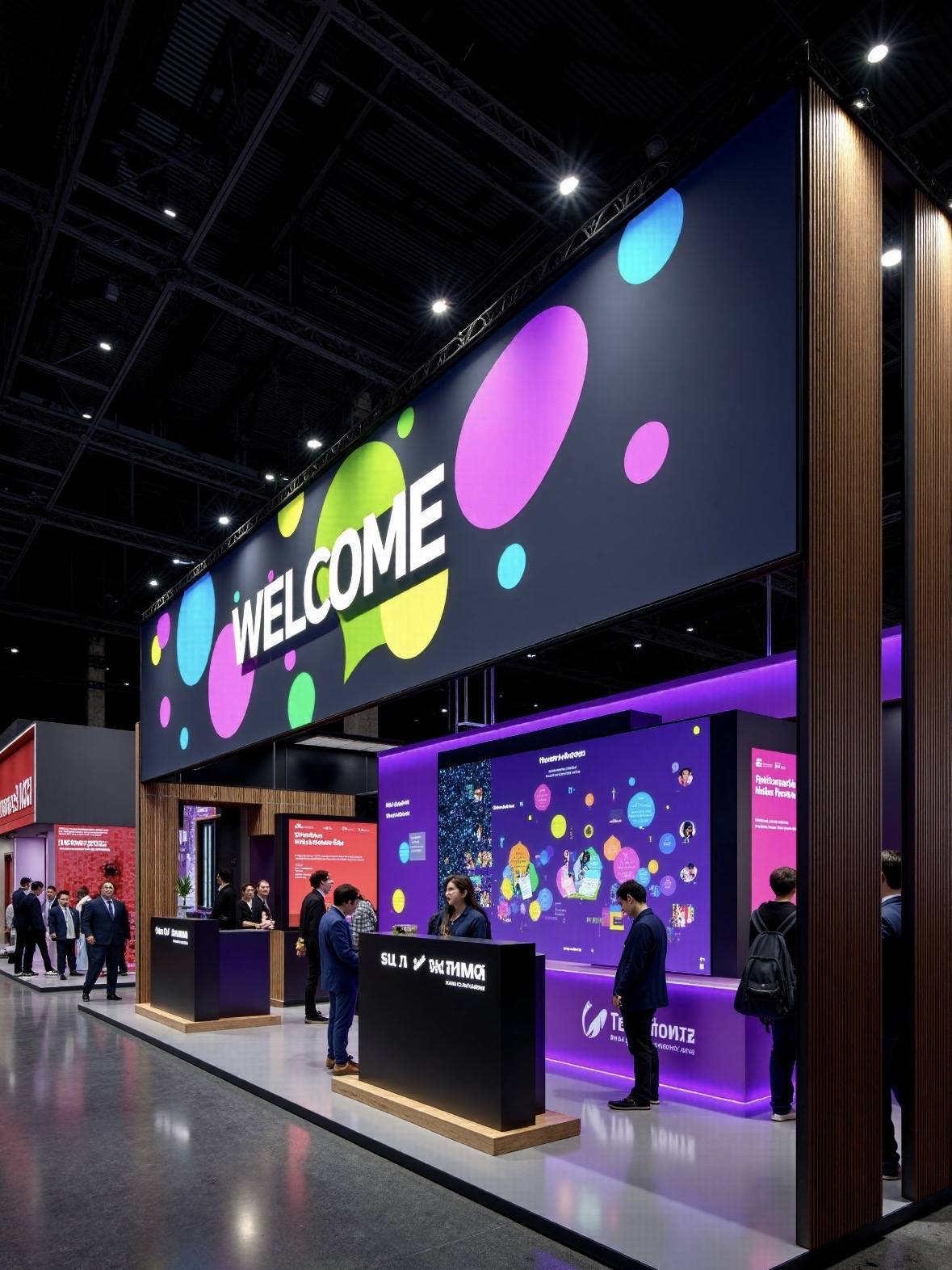
For this requirement our range covers it directly: the RH-PRO fine-pitch COB (flagship, full redundancy) and the COB CV-PRO series (Ultra-HD fine pitch).
Related reading: Event and rental LED screens in Brazil
Related reading: LED Rental Pricing Guide 2026: How to Cost a Screen Job