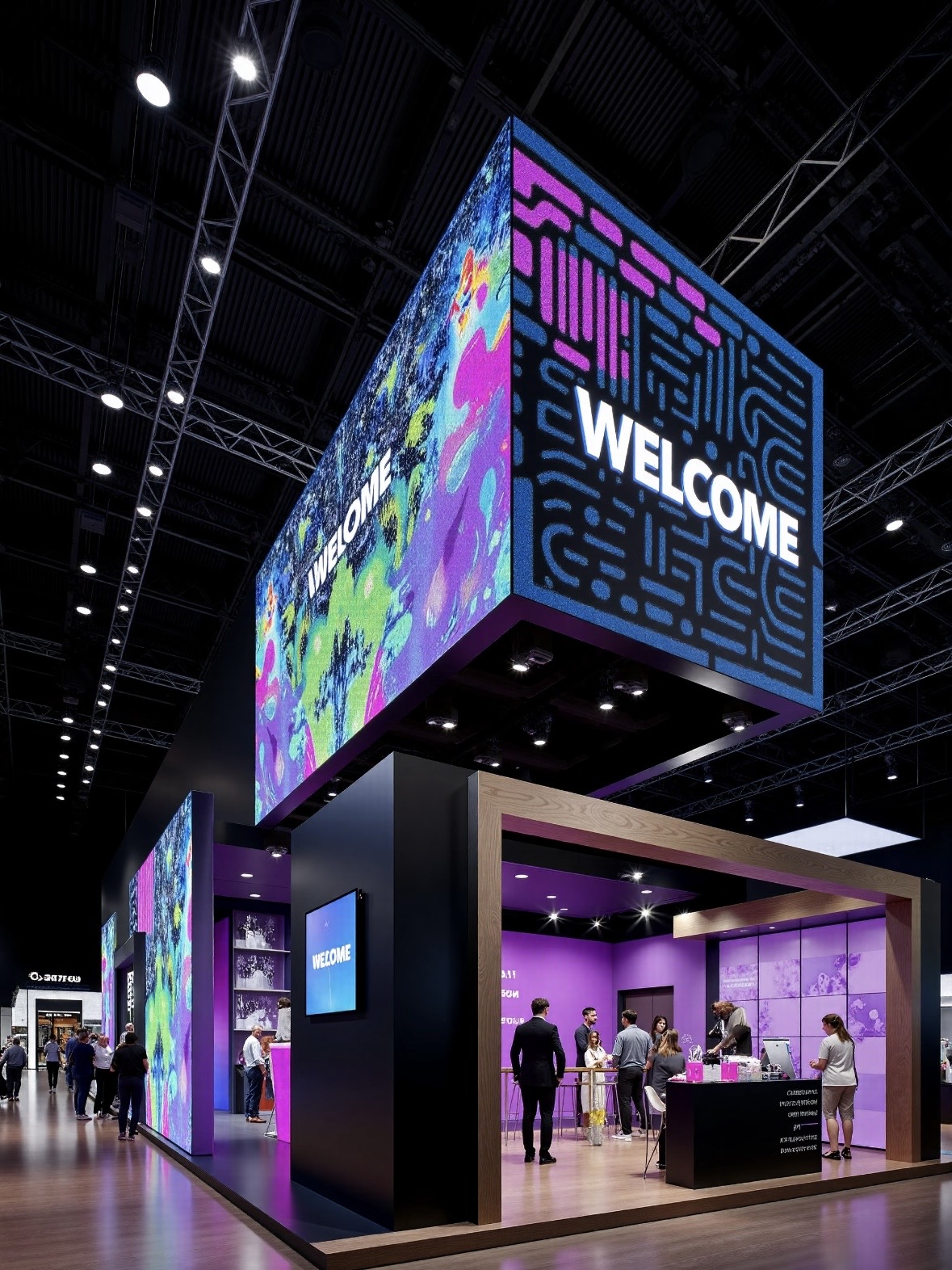
A sports betting venue is a room built around information. Customers watch live events, track odds, follow scores across many games at once, and make decisions in seconds. Every one of those activities depends on a display, and the displays are therefore not decoration but core operating equipment. A dark screen in a sportsbook is not a cosmetic problem; it is lost business and lost trust.
The display challenge is unusual because it combines two very different jobs. On one side, high-impact video walls show the featured event to a room full of people. On the other, dense data boards show odds, results, and tickers that must be accurate and update continuously. A venue needs both, and they are specified differently.
Regulation adds another layer. In many jurisdictions betting displays are subject to rules about what information must be shown and how, and the systems that feed them must be auditable. A display that cannot be trusted to show the correct odds is a compliance risk, not just an inconvenience.
This guide covers where LED belongs in a sportsbook, how odds boards and video walls are specified, how data feeds reach the screens, and how redundancy keeps the room running when something fails.
The organizing idea is uptime. In a venue where the screens are the product, reliability is the most important specification, and every other choice should be made with that in mind.
The main video wall is the centerpiece. It shows the featured event, usually a single large image, plus surrounding panels for other live games. Sizes are large, often several meters wide, and viewing distance across a room runs from five to twenty meters, so pixel pitch can be moderate while still looking sharp on fast motion. High refresh and high frame handling matter because sport is the most motion-heavy content there is.
The odds board is the venue's data backbone. It lists events, markets, and prices, and it must update continuously from the trading system. Traditionally these were LED matrix displays for their brightness and legibility, and modern installations use fine-pitch LED panels that can show both text tables and graphics on the same surface.
The ticker or ribbon display runs around the room, showing scores, upcoming events, and promotional messages. It is a long, narrow format, similar in principle to a stadium ribbon, and it keeps peripheral information flowing without interrupting the main screen.
The betting counter zone has its own small screens, often showing the current customer's selections, payment information, and short promotional content. These are close-view, so they need fine pitch and high reliability because they sit directly in front of staff and customers.
Finally, many venues add entrance and exterior screens to draw customers in, showing live scores and featured events. If these face outward they must be specified for outdoor brightness and weather protection, and if they face inward they can follow the indoor specification.
| Zone | Typical Size | Suggested Pitch | Key Requirement |
|---|---|---|---|
| Main video wall | 6-30 sqm | P1.5 - P2.5 | High refresh, motion handling |
| Odds and data board | 2-8 sqm | P1.2 - P1.8 | Crisp text, continuous updates |
| Ticker ribbon | Long and narrow | P2.5 - P4 | Legibility across the room |
| Counter and terminal | 0.5-1 sqm | P0.9 - P1.5 | Close view, high reliability |
| Entrance and exterior | Varies | P2.5 - P6 | Brightness and protection |
The odds board is where display technology meets the trading system, and the interface between them is where most projects succeed or fail. The display is only the final link in a chain that starts with the trading platform, passes through a data feed, and ends at the screen controller. If any link is unreliable, the board shows stale or wrong numbers, which is unacceptable in a regulated environment.
The data feed is therefore as important as the screen. Prices, event names, and results must arrive in a structured, timestamped form and be rendered by software that can update individual cells without redrawing the whole board. This partial-update approach keeps the display stable and readable, avoiding the flicker and full-screen refreshes that make a board hard to read.
Content for the main video wall is a different discipline. It usually combines live video feeds, graphics overlays with scores and odds, and promotional content, all managed from a media server or control system. The operator needs to switch sources quickly and reliably, because the featured event can change at short notice.
Typography and layout decide whether a data board works. Text must be large and high contrast, columns aligned, and prices formatted consistently so the eye can scan quickly. Color coding can highlight movement in odds, but it must not be the only signal, and it must be consistent across the whole venue so customers learn it instantly.
Branding and promotion are woven through all of this. Sponsorship ribbons, venue branding, and promotional messages share the screens with the data, and the content system must be able to schedule them without ever compromising the accuracy of the core information.
| Display Type | Primary Role | Data or Video | Update Pattern |
|---|---|---|---|
| Main video wall | Featured event and multi-game | Video with graphics | Real-time sources |
| Odds board | Markets and prices | Data tables | Continuous, per market |
| Ticker ribbon | Scores and promotions | Scrolling data | Continuous |
| Counter terminal screen | Customer selections | Data and prompts | Per transaction |
| Entrance display | Draw customers in | Video and scores | Frequent |
In a venue where the screens carry the business, a single point of failure can stop trading. Redundancy is therefore designed in, not added later. The power path should avoid a single breaker feeding the whole room, the data path should avoid a single switch or controller, and critical screens should have a standby source that can take over if the primary fails.
Signal redundancy matters as much as power. A spare sending card, a backup media server, and dual data paths mean that a failed component degrades the display rather than darkening it. For an odds board, even a short outage is a real cost, so the design should aim for graceful degradation, where a partial failure leaves the essential information visible.
Compliance shapes what must be displayed and how. Venues in regulated markets may be required to show responsible gambling messages, minimum age notices, and specific information about odds and returns. These requirements should be designed into the screen layout from the start, as permanent elements, rather than added as an afterthought that clutters the board.
Monitoring keeps the room honest. Remote monitoring of screen health, temperature, and signal status lets staff fix problems before customers notice, and it produces the records that a regulated operator may need. Automated alerts when a board stops updating are far more useful than a customer complaint.
Finally, service access should be planned for a busy room. Front-serviceable cabinets let a technician replace a module during opening hours without scaffolding or closing a section, which is essential when the venue cannot afford downtime.
Asia Vision Technology supplies indoor LED for sports betting venues, from fine-pitch COB panels for odds boards and counter screens to large seamless walls for featured events, with refresh rates of 3840 Hz and above to keep fast sport motion clean on screen and on camera. Our indoor lines are certified to CE, FCC, and RoHS.
We help venues plan redundancy, size each display zone to its viewing distance, and integrate data-driven content so odds and results update reliably. Orders ship in 15 to 20 working days with a 3-year standard warranty.
For this requirement our range covers it directly: the COB Z rental series (7680Hz flip-chip) and the COB ZH touring series (sealed, wind-rated).