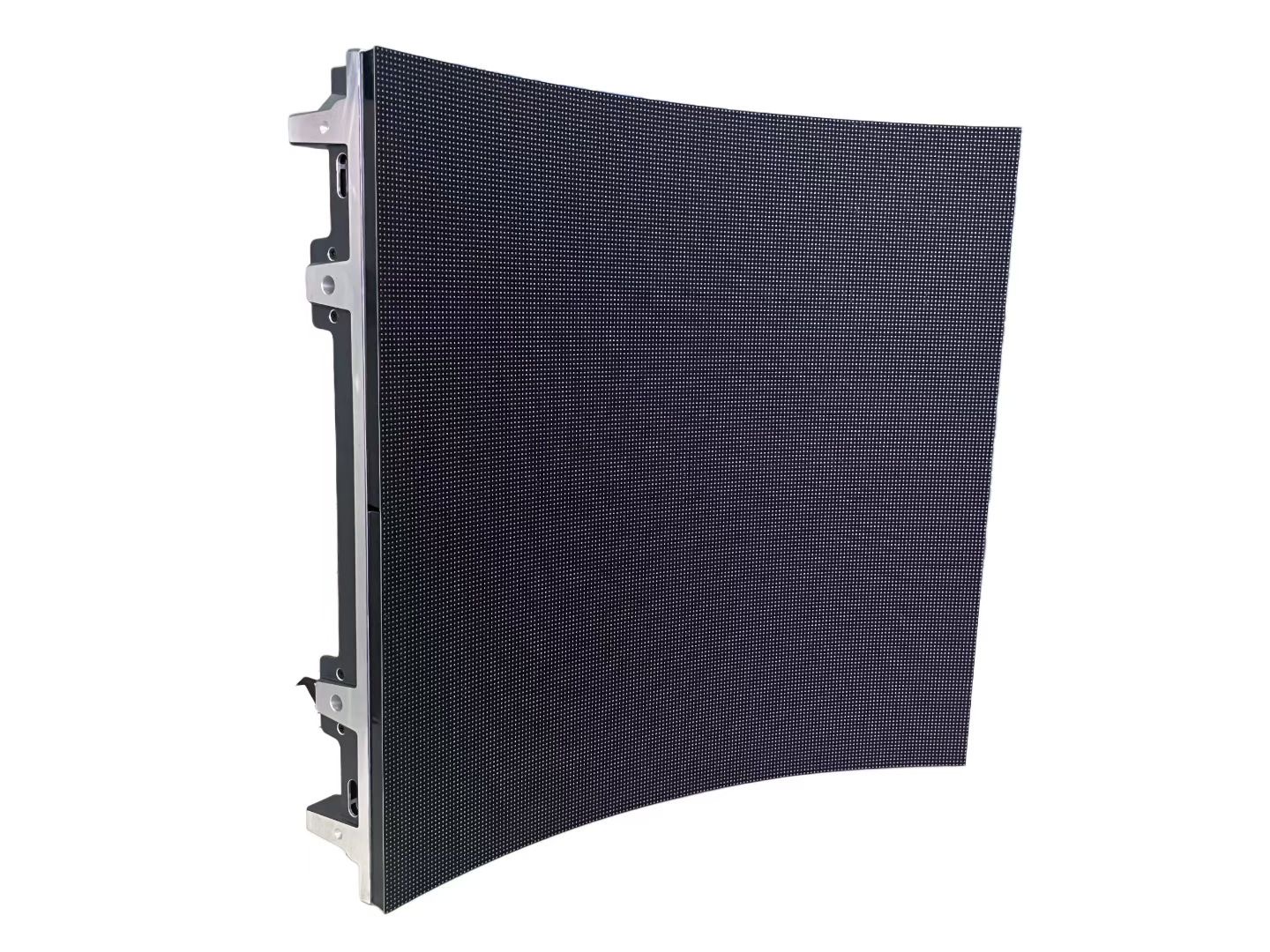
Most outdoor LED billboard failures that reach the news are not display failures. The cabinets are still working when the frame twists, the anchors pull, or a panel tears away in a storm. Buyers spend weeks comparing pixel pitch and brightness and almost no time on the steel that holds the screen above a street, and that is the wrong way round. The screen is the visible part, but the structure is the part that carries risk.
An outdoor billboard is a building attachment. It catches wind across a large flat face and transfers that load into a facade, a column, or a foundation. The display manufacturer supplies cabinets and control gear; a structural engineer supplies the certified design that keeps those cabinets attached. A project only works when both sides talk to each other before fabrication begins.
This guide walks through the structural decisions that shape an outdoor billboard project: how wind load is calculated, how the steel frame is designed, which mounting method suits which site, how corrosion is controlled, and what inspection routine keeps the installation safe long after handover. It is written for project managers and buyers who need to ask the right questions of their engineer and their supplier.
The practical message is simple. Lock the structural concept early, share cabinet dimensions and weight data with the engineer while the design is still on paper, and treat the steel as a first-class part of the budget. Teams that do this avoid the two most expensive mistakes in the category: buying the screen before the frame is designed, and discovering after installation that the facade cannot carry the load.
Everything below applies to wall-mounted, column-mounted, and freestanding billboards, including rooftop and highway-facing units. The principles are the same; only the numbers change.
Wind is the dominant force on any large outdoor screen. A billboard presents a broad flat face to the wind, and pressure rises with the square of wind speed, so a storm that doubles the wind speed quadruples the load on the frame. Structural engineers start from the local design wind speed, then adjust for terrain, height above ground, and the exposure of the site. A screen on an open highway is loaded far more heavily than the same screen sheltered between two buildings.
Two numbers matter most: the design wind pressure and the resulting overturning moment at the base. The overturning moment is what tries to tip the whole structure over, and it grows with both the face area of the screen and the height of its center above the foundation. This is why a taller billboard needs a disproportionately heavier base, and why adding even a modest amount of screen area to an existing frame is dangerous unless the frame is re-checked.
Frame design then follows normal structural practice. Steel sections are sized for bending and deflection, connections are detailed for the calculated loads, and anchors are chosen for the substrate they sit in. Deflection limits deserve special attention: a frame that flexes too much under gust loading will open seams between cabinets, and a moving screen reads as defective to every viewer even when the electronics are perfect.
Fatigue and vibration are secondary concerns but they matter on tall units. Constant buffeting works on welds, bolts, and anchor plates over years. Good designs use generous safety factors, avoid sharp stress concentrations, and specify bolt classes that resist loosening. On exposed rooftop installations, engineers sometimes add damping or stiffening to keep resonant movement under control.
The takeaway for buyers is that structural design is a calculation, not a guess. Ask your engineer for the assumed wind speed, the calculated overturning moment, and the deflection limit they designed to. Those three numbers tell you whether the frame was genuinely engineered or simply copied from a previous job.
| Site Type | Design Wind Concern | Frame Approach | Base / Anchor |
|---|---|---|---|
| Sheltered urban wall | Low exposure, wake effects | Light steel sub-frame to facade | Chemical or mechanical anchors into concrete |
| Open street corner | Gust from two directions | Braced sub-frame, stiffened corners | Through-bolts to structural slab |
| Highway roadside | High steady wind, vehicle wake | Heavy single or twin column | Reinforced concrete pad foundation |
| Rooftop parapet | Height exposure, uplift | Portal frame with uplift ties | Ballasted or tied to roof structure |
| Coastal landmark | Corrosion plus storm loading | Hot-dip galvanized heavy frame | Piled or deep pad foundation |
Wall mounting is the cheapest and most common option when a suitable structural wall exists. The screen sits on a steel sub-frame anchored into the building, and the building itself resists the wind. The catch is that the wall must be able to take the concentrated loads at each anchor point, and many facade panels cannot. A curtain wall or a thin cladding system usually needs a secondary steel frame that spans back to the primary structure before any screen load can be transferred.
Column mounting suits standalone roadside billboards where a wall is unavailable. One or two steel columns rise from a foundation and carry the screen face. This method is simple to permit and easy to service from the ground or from a lift, but it concentrates all load into a small base area, so the foundation is heavy. Twin-column designs give better stability and are preferred for wide screens.
Freestanding portal frames are used where no building and no single column will do, such as large roadside structures that must span a wide face. They behave like a small building and are fully engineered for wind and, in some regions, for snow and seismic loading as well.
Whichever method is chosen, service access must be planned at the same time. Front-serviceable cabinets let technicians work from the screen face and suit wall-mounted units where no rear space exists. Rear-serviceable cabinets need a walkable maintenance plenum behind the screen, which consumes space but makes routine work faster. On column and freestanding structures, plan a safe working platform or lift access for the power and control cabinets, because those are the parts most likely to need attention during the screen's life.
A frequent and costly oversight is spare structural capacity. The frame, the power distribution, and the data path should be sized for the content and the possible future expansion the client intends, not only for the launch configuration. Adding to a sealed, already-fabricated frame later almost always means new engineering and new steel.
| Method | Best For | Structural Demand | Service Access |
|---|---|---|---|
| Wall sub-frame | Screens on a structural facade | Depends on wall capacity, may need spanning frame | Front access preferred |
| Single column | Narrow roadside billboard | Heavy concentrated base load | Ground or lift access |
| Twin column | Wide freestanding screen | Two foundations, better stability | Platform between columns |
| Roof portal frame | Rooftop and parapet screens | Uplift and height exposure critical | Roof access and walkway |
| Ground support truss | Temporary or semi-permanent | Ballast or ground anchors | Open access, quick setup |
Outdoor steel lives in a hostile environment. Rain, humidity, salt, and pollution attack coatings and fasteners continuously, and a screen above a street is hard to reach for repair. Corrosion protection is therefore specified for the design life, not for the first year. Hot-dip galvanizing is the default for structural steel, with a powder or paint topcoat for appearance and extra barrier protection. Fasteners should be stainless steel in coastal and high-humidity regions, and all fixings should be a single material family to avoid galvanic corrosion where dissimilar metals touch.
Cabinets carry their own environmental rating. For outdoor billboards, specify IP65 front and rear with a sealed signal path and drainage for condensation. In coastal markets, add conformal coating to driver boards and choose sealed connectors. Water ingress, not sunlight, is the leading cause of early LED billboard failure.
Foundations are designed by the structural engineer from the soil report and the overturning moment. A surprisingly common error is to size a foundation from the screen weight alone, ignoring the wind moment, which can be several times larger. The soil report is not optional; without it, the engineer is guessing, and a failed foundation is both dangerous and extremely expensive to correct.
Inspection should be a scheduled routine, not a reaction to a problem. A practical program includes a visual and torque check of anchors and bolts after the first storm season, an annual review of coating condition and drainage, and a periodic check of cable glands and seals. Thermal imaging on the power cabinets, where available, catches loose terminations before they fail. Records from these inspections also protect the owner if an incident is ever investigated.
Finally, lightning and surge protection belong in the structural conversation, not only the electrical one. Tall exposed structures attract strikes, and a properly bonded, earthed frame with surge protection on the power and data lines protects both the screen and the people who maintain it.
Asia Vision Technology builds outdoor LED displays rated IP65 with brightness above 8000 nits on our D-PRO line, certified to CE, FCC, and RoHS for export markets. For billboard work we supply cabinet dimensions, weights, and wind-load data early so your structural engineer can lock the steel design before fabrication starts.
Our outdoor product range covers the pixel pitches large-format billboards need, from fine pitch for close viewing to coarse pitch for highway signs, and we pre-configure the receiving system for your screen geometry. Orders ship in 15 to 20 working days with a 3-year standard warranty.
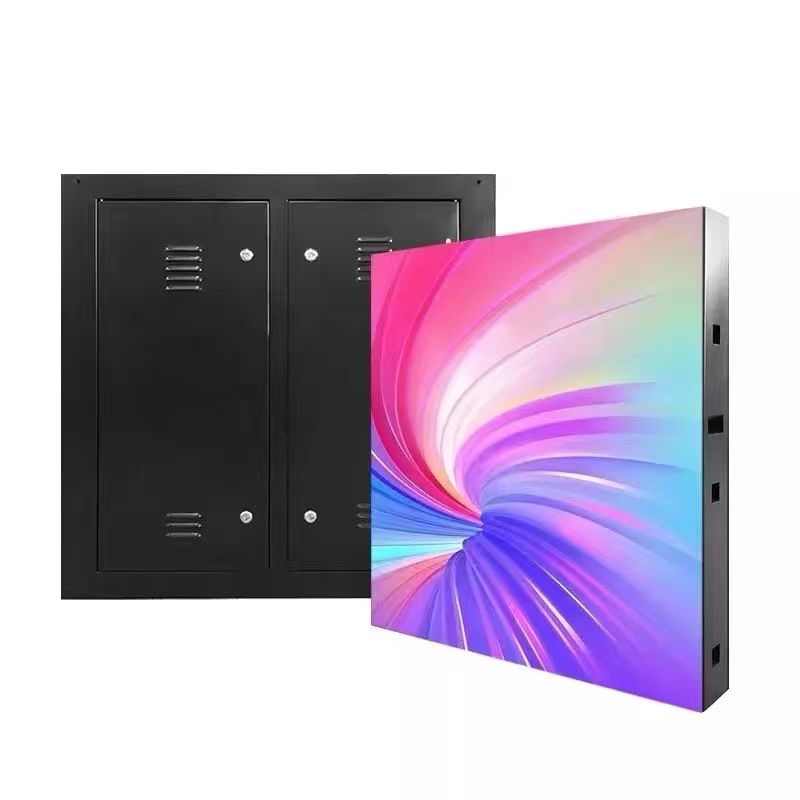
For this requirement our range covers it directly: the RH-PRO fine-pitch COB (flagship, full redundancy) and the COB CV-PRO series (Ultra-HD fine pitch).
Related reading: LED display distribution in Brazil