What should a French event buyer settle before ordering rental LED screens? Three things decide the outcome: the panel's refresh rate and weight class for touring, the CE documentation that travels with the shipment, and whether the supplier can get a replacement panel to you inside the season. This guide covers how to specify, certify and import rental LED screens for French events.
France's demand for LED displays is anchored in an unusually busy events calendar. The country hosts major sporting fixtures, national celebrations, music festivals, and a dense trade-fair programme, and each of these needs rental screens for main stages, side screens, and fan zones. Rental houses in the Paris region and in cities such as Lyon, Marseille, and Bordeaux carry inventory that is booked repeatedly through the year, so the market rewards cabinets that build fast and survive heavy handling.
The retail sector is the second engine. Paris concentrates luxury houses, flagship stores, and department stores along the Champs-Élysées, Rue de Rivoli, and the grands boulevards, and these brands use LED feature walls and window displays to face the street. Shopping centres across the country, from regional malls to premium destinations, add permanent atrium and wayfinding screens, and they typically specify a wide dimming range so a display looks correct in daylight and after dark.
Culture and tourism add a distinct layer. Museums, cathedrals, châteaux, and theme parks use LED for sound-and-light shows and interpretation walls, and these projects often sit inside protected buildings where noise, weight, and structural intrusion are tightly controlled. That pushes the specification toward fine-pitch panels that mount discreetly and run quietly rather than toward the brightest screen available.
Regulation shapes the French market in a way that is specific to the country. National rules on illuminated advertising and on energy sobriety have tightened the limits on how bright and how large a public screen may be, and municipal authorities enforce them at the permit stage. The practical consequence is that French buyers weigh controllability, dimming range, and power consumption more heavily than buyers in some other markets, because a screen that cannot be dialled down may not be approved at all.
France applies the European Union framework, so CE marking is the mandatory legal requirement and the technical file behind it is what matters in practice. Alongside CE, buyers sometimes meet the voluntary French NF mark, which a tender or a public client may name even though the law does not demand it. The table below sets out what each item covers and what a buyer should do about it.
| Item | Market | What It Covers | Buyer Action |
|---|---|---|---|
| CE marking | France and the EU | Low Voltage, EMC, Radio and RoHS directives | Hold the signed declaration of conformity on file |
| NF mark | France | Voluntary French quality and safety scheme | Specify only when a client or tender names it |
| RoHS report | France and the EU | Restricted substances in modules, cables and plastics | Ask for a report broken down by material |
| EN 55032 and EN 55035 | France and the EU | EMC emission and immunity test standards | Confirm the report names the shipped model family |
| Ecodesign and ErP | France and the EU | Energy use and standby power rules | Request power draw at a defined brightness level |
| Nameplate and label | France | 230 V 50 Hz rating matching the declaration | Review the artwork before the container leaves |
French LED demand is unusually concentrated around a small number of event formats and venues. Knowing them tells you which specification will actually be requested.
| Event type | Typical LED use | Specification pressure |
|---|---|---|
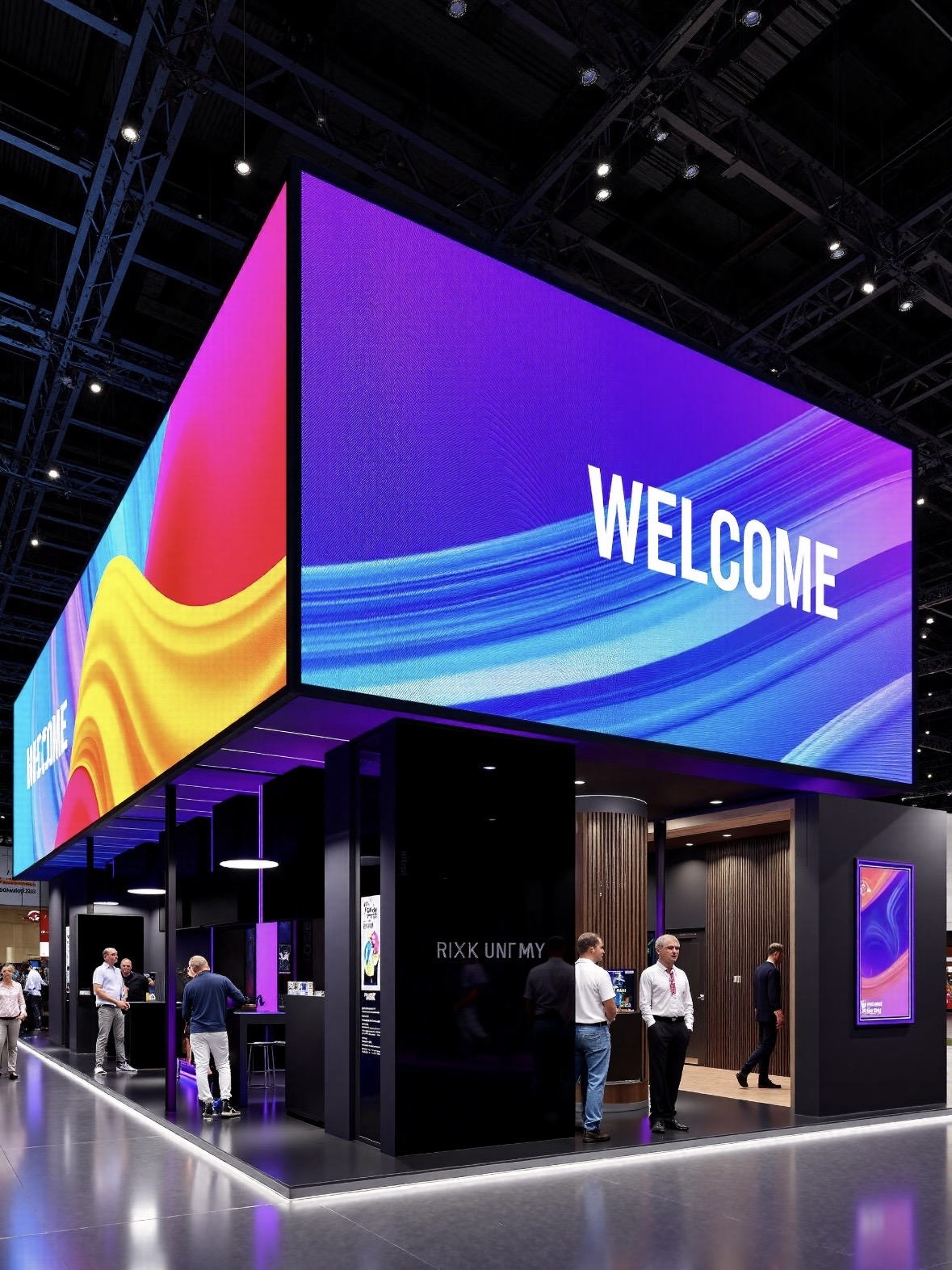
| Trade and creative fairs (Cannes, Paris) | Backdrop walls, curved stage sets, presentation screens | Camera-safe refresh; fine pitch at close viewing distance |
| Festivals and touring shows | Rental stage walls, side screens | Fast rigging, touring packaging, high brightness for daylight sets |
| Corporate and product launches | Immersive backdrops, lobby displays | Colour accuracy, seamless splicing, brand-critical finish |
| Sporting venues | Perimeter and large-format screens | Broadcast refresh; structural certification for the mount |
| Retail and flagship stores | Window and in-store displays | Fine pitch, quiet operation, easy content updates |
Two French characteristics shape purchasing. First, the rental market is dominated by a small set of established hire companies who supply most major events — selling into France usually means becoming a supplier to them rather than reaching end clients directly. Second, because so much work is event-driven, delivery timing is often more sensitive than price: a wall that arrives a week late has no value, however competitive the quote.
CE marking is the legal baseline for LED displays placed on the French market, supported by a declaration of conformity and test reports naming the exact model. Beyond that, three practical details trip up importers:
Hire companies in France buy differently from end clients, and the difference matters if you want repeat business:
France is served by both Atlantic and Mediterranean gateways, which gives importers a genuine choice of route. The right port depends on where the installation sits and how quickly the goods are needed. Sea freight suits full containers and permanent projects, rail suits mid-size orders, and air freight is reserved for spares and urgent kits.
| Route | How It Works | Typical Transit | Best For |
|---|---|---|---|
| Sea via Le Havre | Direct service from Shenzhen to the Atlantic gateway | 30 to 38 days port to port | Full containers and Paris-region projects |
| Sea via Fos or Marseille | Mediterranean service, then rail or road north | 30 to 40 days port to port | Southern France and Mediterranean sites |
| Sea via Antwerp or Rotterdam | Benelux port with a bonded road leg into France | 32 to 42 days door to door | Northern France and cross-border logistics |
| China-Europe rail | Block train to Lyon or Duisburg, then road | 22 to 30 days | Mid-size orders on a tight schedule |
| Air freight | Shenzhen to Paris CDG | 5 to 8 days | Spare modules, samples and small kits |
For rental and touring work the X series is the natural fit. Its 500 by 500 millimetre cabinets weigh 6.5 kilograms, lock together quickly, and support both front and rear service, which matters when a stage is built against a wall or a set piece. At P2.6 and P3.9 the pitch covers the viewing distances of a typical French festival main stage, and the cabinets are engineered for repeated transport and fast changeovers.
For permanent indoor installations the CV-PRO COB line answers the requirements of French retail and corporate spaces. The chip-on-board surface reaches around 10000:1 contrast and hides the lamp gap that becomes visible at close range, so a feature wall photographed for a press launch holds up under inspection. A refresh rate of 3840 Hz and above keeps the image clean when cameras are present, which is common at brand events in Paris.
Outdoor work calls for the D-PRO range, rated IP65 and delivering more than 8000 nits so that a facade or a festival screen stays readable in daylight. Because French rules constrain illuminated advertising, the wide dimming capability of these panels matters as much as peak brightness: a screen that can drop to a low evening level without losing grey-scale detail is easier to approve and kinder to neighbours.
Across all three lines the pitch range from P0.9 to P20 lets a project be matched to its closest realistic viewing distance rather than rounded to a catalogue size. A ticketing hall seen from ten metres does not need the same panel as a luxury window seen from two, and specifying each surface for its own distance is usually where the largest saving in a French project is found.
The table below maps the main French demand segments to the applications they need and the Asia Vision series that suits them.
| Market | Typical Application | Suggested Series | Notes |
|---|---|---|---|
| Paris events and corporate | Convention stages and product launches | X series rental | Fits venue rigging and quick changeovers |
| Retail flagships | Window displays and in-store feature walls | CV-PRO indoor COB | Wide dimming for street-facing windows |
| Sports and fan zones | Match-day screens and perimeter boards | D-PRO outdoor and X rental | Bright enough for daylight broadcasts |
| Museums and heritage | Interpretation walls and temporary shows | CV-PRO fine pitch | Low noise with discreet mounting |
| Touring and festivals | Main-stage and side screens | X series rental | Light cabinets for fast builds |
| Municipal venues | Civic messaging and cultural seasons | D-PRO outdoor | Weather rated and remotely managed |
Asia Vision Technology manufactures indoor COB, rental, and outdoor LED displays at our Shenzhen facility and holds CE, FCC, and RoHS certification for export markets. Our pixel pitch range runs from P0.9 to P20, our indoor CV-PRO COB panels deliver 10000:1 contrast with refresh rates of 3840 Hz and above, our X series rental cabinets measure 500 by 500 millimetres at 6.5 kilograms, and our D-PRO outdoor range carries IP65 protection with brightness above 8000 nits.
For French buyers we work through the specification rather than a catalogue. We confirm the destination market, share the cabinet dimensions that a venue's rigging or wall structure has to accommodate, and issue compliance documentation against the product family that actually ships. Orders are produced in 15 to 20 working days and carry a 3-year standard warranty, and our engineering team supports integrators and rental houses through commissioning.
For this requirement our range covers it directly: the COB Z rental series (7680Hz flip-chip) and the COB ZH touring series (sealed, wind-rated).
Related reading: Event and rental LED screens in Turkey